Wednesday, February 10, 2010

Post #5 Impressions Re: Stem Cell Therapies & XCell-Center

We have done a significant amount of web-based searching for any information related to stem cell research and treatments that might be applied to patients with degenerative neurological diseases. Our purpose in this post is simply to share summaries of what we have found and experienced, not to try to influence you in your own search for answers.

Research that has reached the clinical trials stages appears to be non-existent, or at best in its initial stages (there is one clinical trial for ALS that was recently started in the U.S.). We did not uncover any research world-wide that seemed to warrant stem cell treatments at this time for degenerative neurological diseases, at least by standards recognized by Western Medicine.

Nevertheless, there are stem cell treatments being offered in various countries that are claiming varying degrees of success, including treatments for degenerative neurological diseases. The two primary countries involved in such treatments appear to be China and Germany. We wrote to the institutions in both China & Germany, eventually focusing more on XCell-Center in Germany.

Since there is no known cause or treatment for MSA-C, stem cell therapy appeared to provide the only HOPE left for at least slowing the disease, thereby buying some time in the event other treatments surfaced in the future.

Our primary efforts focused on gathering some type of evidence (statistical and/or anecdotal) from XCell-Center that their treatments of patients with degenerative neurological diseases were at least to some degree effective. Unfortunately, no written statistical evidence was available, and any anecdotal evidence they claimed was not verifiable. Any e-mails or phone numbers they provided were left unanswered when contact was attempted.

I spoke with two of XCell-Center's neurologists, one before going to Germany and the other while we were at the Center, and though both claimed results had been observed, which gave one HOPE, neither could quantify those claims with any statistical or consistent and verifiable anecdotal evidence. One of the neurologists even suggested it was administration's role and responsibility to verify evidence of effectiveness, while his role and responsibility was only to carry out the procedures. Fair enough--it's up to each of us to decide whether we agree with him in that regard or not.

Administration, on the other hand, did admit it was their responsibility to gather and disseminate statistical information regarding results, and that they were in the process of doing that. However, the questions he asked Mariko before the procedure that were supposedly to be used for that purpose appeared to be too scanty and superficial to accomplish any valid statistical purpose. Though I may not fully understand their reporting methodology, it appears they will continue to depend on each patient's voluntary return of a questionnaire they provide for any statistical summary of results. If they agree to share that information, regardless of methodology issues, it will be a welcome improvement.

While the procedures performed, considering the lack of research and clinical studies, would likely not be acceptable under most Western Medicine standards, it is always possible that those at XCell-Center and other stem cell centers around the world have discovered something that will benefit patients who are otherwise without hope of any known treatment. However, if that is true, one would hope that they would become more willing to share statistical information about the efficacy of their treatments with those who ask for it.

In addition, the anecdotal information from blogs should offer some degree of evidence regarding the success of stem cell therapies. Unfortunately, most blogs that were being written by the patient or a family member don't seem to be continued, and though there seems to be enthusiasm initially by those having stem cell treatments, the majority quit writing after a few months, without much continued positive information regarding the benefits of the treatments.

Meanwhile, we do remain hopeful that the stem cell treatment Mariko received will be beneficial. As mentioned before, we will continue to periodically post and to share information we gather with you. We will try to make the next post not later than the first week of March.

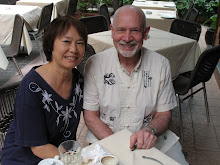
Post #4 XCell-Center Treatment on Feb 4, 2010

At this time we would like to continue sharing our research and experiences related to stem cell treatments with you. This post will describe Mariko's recent stem cell treatment, while the next one will focus on our research regarding stem cell treatments in general, as well as more specific information and impressions regarding XCell-Center in Germany.

Mariko received a stem cell treatment at XCell-Center in Germany on February 4th. Bone marrow was collected on February 2nd, after which the stem cells were isolated from the bone marrow and subsequently implanted on February 4th into the cerebro-spinal fluid by lumbar puncture. Over 4 million stem cells were harvested with a vitality in excess of 90 per cent. The theory is that since the cerebro-spinal fluid circulates, the implanted stem cells are transported directly to the damaged tissue in the brain.

The procedure went well, without incident. However, there were some unexpected side-effects. Although the headache was avoided that sometimes, reportedly, accompanies the treatment, she did experience severe discomfort (severe enough to be considered pain) in the legs and buttocks for 2-3 days. And although the leg discomfort subsided after about the 3rd day, there is still some discomfort in the area of the buttocks (especially when she bends over), almost one week after treatment.

Reportedly, the beneficial effects of the treatment will likely not be felt until sometime during the 2nd or 3rd month following the stem cell implantation. We both remain hopeful there will be noticeable benefits, even though we recognize this is not a cure for the disease, and as such any continuing benefits will be limited due to the degenerative nature of the disease.

It is our objective to post results here as accurately as possible (we recognize that some of our measurement criteria will be somewhat subjective in nature) and on a periodic, somewhat regular basis (at least every 2-4 weeks). If anyone has specific questions for us, we have posted our e-mail address, and we will respond in as timely a manner as possible.

Monday, November 23, 2009

Post #3 Stem Cell Treatments

We have been researching the stem cell therapies that are being carried out in both China and Germany and are seriously considering pursuing treatment in one of those countries. Although recently we have had more contact with the XCell-Center in Germany, we are interested in hearing from anyone, especially with a neurological disease, who has already had stem cell treatments or who knows of someone who has been treated with stem cell therapies. We are interested in hearing from you, regardless of where you might have had the treatments, and regardless of the results. If you prefer writing to us directly, rather than posting below under comments, our e-mail address is fmsalveson@gmail.com.

ANY INFORMATION OR CONTACTS YOU CAN PROVIDE US WITH AT THIS STAGE IN OUR OWN SEARCH FOR ANSWERS WILL BE GREATLY APPRECIATED.

Thank you in advance.

NOTE: We will continue to make updates and changes to this blog, so please check back on at least a periodic basis. We promise that we will keep you as honestly and accurately informed of Mariko's treatment(s) and condition/progress as possible.

Friday, November 20, 2009

Post #2 MSA Diagnosis & History

I first noticed symptoms of what was later diagnosed as MSA-C in August of 2006. I had just moved to Hong Kong for a teaching job and had gotten new glasses shortly after arriving there. I noticed a slight depth of field problem, such as stepping off street curbs and not judging the curb's edge correctly, some periodic blurring of vision, etc. I thought it was the glasses that were the problem and didn't do anything about correcting the problem until the following summer vacation (school holidays--July of 2007)and found that my glasses were not the problem.

I began to follow up with routine blood tests, which were all normal. Then came a series of scans--CT and PET scans in the fall of 2007, which showed a slight deterioration of the right cerebellum, resulting in a generic diagnosis of "cerebellum atrophy", and then an MRI in November of 2008, which resulted in a tentative MSA-C diagnosis. This diagnosis was confirmed by Dr. Fahn of The Neurological Institute at Columbia University Medical Center in New York. Additionally, an autonomic test, conducted during my visit to NYC, showed findings that are consistent with but not specific for early autonomic failure or autonomic neuropathy. Cancer, for now, has been ruled out, based on blood tests and scans that have been performed to date.

Other early signs of a problem, besides the vision issues discussed above, were noted by both my son and my husband. As early as August of 2006, my son helped me with my move to Hong Kong and recalls that he noted that I tended to walk with an abnormally wide stance. My husband joined me in Hong Kong in January of 2007, and he observed the same wide stance that my son says he had noted earlier. Another incident in January of 2007, thinking back, that may have been an overlooked indicator of problems to come was a bowling outing with some of my teaching associates. I guttered roughly every other ball, and I wasn't able to make the necessary adjustments. I now realize that I may have been experiencing the first signs of not being able to control my right hand.

Current symptoms, likely associated with this disease, include:

* Gait difficulties and imbalance
- Wide-based stance for balance
- Use cane when walking or furniture & walls when walking around the house
- Right side of body, including right leg "feels" weaker, at least less control
- Right-sided cerebellar dysmetria, with intention tremor and past-pointing

* Vision
- Still some depth of field difficulties
- Perceived increased sensitivity to bright lights and sunlight
- Hand-eye coordination slower, especially when using right hand

* Hands & Feet/legs
- Difficulty controlling right hand & right leg
- Right handed, but currently write using left hand
- Finger-to-nose and heel-t0-shin are moderately dysmetric on the right, mild on
the left; also dysdiadochokinesia, R>L

* Light headed or faint
- Not dizzy, but sometimes light headed when climb stairs of get up quickly

* Voice
- Mildly slurred; cerebellar speech

* Autonomic Functions
- Mild autonomic dysfunction with likely asymptomatic orthostatic hypotention

* Dreams
- Acting out of dreams is moderate and periodic;
- Talk in sleep sometimes

* Cognition
- Normal

* No Parkinsonian signs
- Tone, power: normal
- Reflexes: reduced
- Plantars: both downgoing

Current Therapies:

Although I am still able to get around with the help of my husband and/or a cane, or by using furniture and walls while walking around the house, my condition has been steadily worsening. I am currently working on my speech difficulties with a speech specialist using the Lee Silverman Voice Treatment (LSVT), as well as beginning Physical Therapy again (I also had some PT while in Hong Kong. In addition, I am in counseling and am looking at the possibility of participating in support groups.

Next Post:

I'm hoping to discuss our search for potential treatments of MSA-C, including stem cell treatments, in my next post. Anyone who has researched or had stem cell treatments is encouraged to post your experiences here, in advance of my next post on the subject, as we are currently investigating stem cell treatment results (anecdotal as well as documented)in contemplation of pursuing stem cell therapies outside of the U.S.

Thursday, November 19, 2009

Post #1 Introduction

Multiple system atrophy (MSA) is a degenerative, neurological disorder, which is associated with the degeneration of nerve cells in specific areas of the brain. This cell degeneration causes problems with movement, balance and autonomic functions of the body. For a more extensive definition of MSA, please consider going to Wikipedia at http://en.wikipedia.org/wiki/Multiple_system_atrophy, or to NINDS (National Institute of Neurological Disorders and Stroke at http://www.ninds.nih.gov/disorders/msa/msa.htm. Other sources of information about MSA are listed in this blog's index.

There is no cure for MSA, and currently, there are no proven treatments to delay the progress of neurodegeneration in the brain. A possible "hope" for at least slowing the degeneration is stem cell therapy, which I will discuss in a separate post.

My primary purpose in writing here is to share information I have read and gathered about MSA with you. Of course, I'm also hoping this blog will be a conduit for exchanging MSA-related stories and information that might be beneficial to anyone affected by this or a related illness.

To leave a remark or to view what others have said, just click on the word "comment" at the end of each post. Alternately, if you wish to contact me directly with either information or questions, please feel free to do so. My e-mail, also listed above as an e-mail link, is fmsalveson@gmail.com.

My next post will be a brief description of my MSA history, and several related links will also follow. My husband and I look forward to an ongoing exchange of ideas and information with each of you who chooses to establish a relationship with us, either through this blog or personally through e-mails.